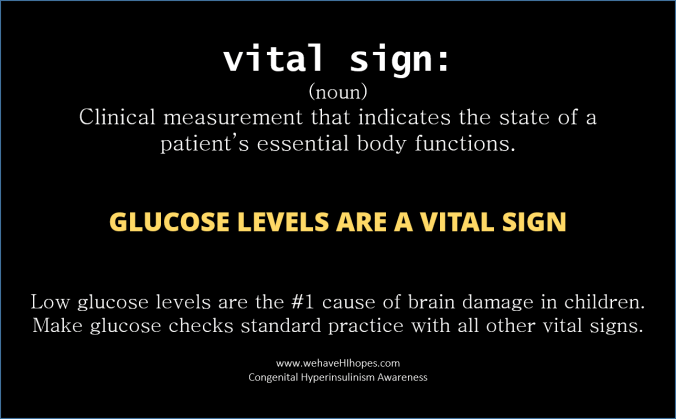
Glucose Levels are Vital Signs
I know this is a long post, but if you have a few minutes, I hope you’ll read it and continue supporting my family and others like ours. The more you know!
The Orphan Drug Act (ODA) was passed in the U.S. in 1983 to encourage drug companies to research and develop therapies for rare diseases. Why is it called “orphan”? Because rare disease therapies generally lack sponsors to develop them. The market is small, research is expensive, and there is very little return on investment.
There are over 30 million Americans living with more than 7,000 rare conditions—yet only 5% of these diseases have an approved treatment. This means that the majority of those affected have no treatment options at all. For many families, taking a loved one home and being told to “make the best of the time they have left” is a devastating reality.
To incentivize research, the Orphan Drug Designation grants manufacturers and sponsors a 50% tax credit on qualified clinical testing, along with access to several grants to help offset development costs. According to the FDA, in the decade before the ODA was passed, only 10 treatments were developed for rare diseases. Since then, this incentive has helped bring nearly 500 new medications to patients—a proven track record of success.
Today, the House passed the Tax Cuts and Jobs Act, and the Senate will vote after Thanksgiving. This bill includes a proposal to repeal or weaken the Orphan Drug Tax Credit. This is one of the few tax credits that has directly saved lives. I’m asking you to stand with the #raredisease community to ensure it is not weakened or repealed as part of tax reform.
Follow the link below, enter your address and zip code, and a pre-written letter to your senators and representatives will be generated for you. All you need to do is enter your name, home address, email, and hit submit. It’s that easy.
https://salsa3.salsalabs.com/…/p/dia/action4/common/public/…
As always, thank you so much for your support. xoxo
#TheMoreYouKnow #WeHaveHIHopes #Hyperinsulinism #OrphanDrugs #TaxReform
There are days when I could cry if one more person says, “Oh, he looks great! He must be doing well!” Of course, I know it’s well-meaning. But when you’re in the trenches of a struggle and people congratulate you on a success that isn’t real, it’s disheartening.
When your child has invisible conditions, it’s hard for others to look at a beautiful toddler and see that his life is in jeopardy every moment of the day. Some days, I just smile and nod because explaining it all would take more time than either of us has. And I am grateful that people care enough to ask how he’s doing. But the misconception that looking “okay” means being okay isn’t true.
What’s even harder? When I’m the mom, looking at my seemingly healthy child, searching for the one tiny sign that something is wrong. That one subtle clue that others would overlook—because if I miss it, it could mean another emergency. Even his dad will admit that sometimes, he thinks our son is fine, but I see something—a barely perceptible difference. And sure enough, we end up earning more frequent flyer miles at the children’s hospital.
My rare superhero is my second child. My first was a breeze—truly. I remember lying next to her, soaking in every little detail of her face, her laugh, her smell, those sweet baby kisses. Motherhood with my son started the same way—until one day, everything changed.
Now, I still try to enjoy all those little moments, but my eyes have become like an X-ray machine, constantly scanning him for signs of distress. His rare conditions have robbed me of that blissful ignorance.
When my gut first told me something was wrong, we rushed him to the ER. I tried to explain to the doctor that something was off. His personality was gone. He wasn’t blinking. He was staring into space. The doctor took one look at him—without running a single test—and sent us home.
“He looks fine.”
“He’s perfectly healthy.”
“Go home and enjoy him.”
He blamed it on new mom paranoia. And for a moment, I questioned myself.
Those doubts didn’t last long—because when a mother’s gut says something is wrong, there’s no stopping her.
A few days later, I took him to another ER. Within 30 minutes of arriving, everyone knew something was dangerously wrong. My son was near death from severe hypoglycemia. Yet, on the outside, he looked normal.
He is hypoglycemia unaware—his body doesn’t show typical signs of low blood sugar. And his disease? Congenital Hyperinsulinism—the #1 cause of irreversible brain damage in infants. No pressure, right?
As if that wasn’t enough, he was also born with two rare congenital birth defects in his larynx, masked by silent aspiration.
I had never even heard of silent aspiration before. It means that when he inhales liquids or solids into his lungs, there’s no coughing, no watery eyes—no outward sign at all. By the time we figured it out, he had already suffered permanent lung damage.
Now, after years of misdiagnoses and setbacks, we are finally, hopefully, on the road to recovery.
Having a child with invisible conditions has made me question my own sanity. I wonder how people see me.
I don’t know.
If you need perspective, imagine your dream home.
The one you’ve daydreamed about—the one you’d buy with your lottery winnings. It’s stunning. Incredible curb appeal. A white picket fence. A wrap-around porch. Room for the tallest Christmas tree. Spiral staircases. Every feature you’ve ever wanted.
Inside? It holds everything that means something to you.
But there’s one catch.
It’s built on a sinkhole.
At any moment, it could all collapse.
That’s what an invisible disease feels like—for me, anyway.
Or maybe a better analogy:
Imagine you have a beautiful, intelligent, loving little boy. He completes your family. He makes your life whole. He has a wonderful life ahead of him—one he has had to fight for, every single day.
Inside him are diseases and conditions most people have never heard of. And you? You have to be on guard every moment of every day to get him to the next. You have to see what others can’t. Complacency is never an option.
Most moms in my shoes will tell you—we’re grateful for what we have. And we truly are.
I love my children. As perfectly imperfect as we all are, this is the journey we’ve been given. And we have an incredible support system—I will forever be grateful for the kindness we’ve been shown.
But this road is hard.
Because what you see isn’t always the truth.
For my family, rare is our reality. And from the outside? It looks really pretty.
On the inside?
Well… that depends on the day.
Jackson didn’t pass the cure fast. He became unstable quickly, and I cried—a lot. I was so desperate for relief. But if there’s a silver lining, it’s that he isn’t worse. We are still managing his disease as we always have. Hyperinsulinism continues to be our reality.
Due to some scheduling delays, we got a late start. We officially began the study on Saturday afternoon, and within 24 hours, he became unstable. He started requiring feeds every two hours just to keep his blood sugar above 70. About 20 hours off diazoxide, his blood sugar was headed into the 40s—a clear sign that he is still severely hypoglycemic.
We administered double the glucagon we had in the past to bring his sugar back up. We also ran critical labs again. The results, once more, confirmed congenital hyperinsulinism—ketones were at 0.10, and insulin levels were high. With that, we stopped the study, restarted his medication, and spent the next few days rebuilding it in his system to get him stable again.
During this visit, we were blessed to be followed by Dr. Nadia Merchant, who consulted with Dr. Paul along the way.
Dr. Merchant is an incredible doctor, originally pursuing a fellowship in genetics before shifting to endocrinology—two of the most complex fields of medicine. She’s also one of the most intelligent women I’ve ever met.
And she knows a thing or two about overcoming obstacles. Dr. Merchant is a little person, standing at 3’6” tall. She told us how people always tried to put her in a box, to limit her. But her parents never let that happen—they pushed her. She wasn’t allowed to use her genetic condition as a crutch.
She sat with us for nearly an hour. She knew how disappointed we were, but she reassured us—there is still so much to be thankful for. And we agree.
We have a plan moving forward—more tests, more programs, more opportunities. Dr. Merchant isn’t even our main doctor, but she committed to seeing us through. She admitted it won’t always be easy, but with such a strong support system, she believes Jackson’s potential is limitless.
It’s not the answer we wanted. But we’re committed to making the best of our situation.
Unfortunately, HI isn’t the only thing we’ve had to worry about.
Jackson’s lungs continued to deteriorate. Nine hospitalizations, each requiring high-flow oxygen just to get him through various viruses.
We cycled through diagnoses:
Reactive Airway Disease
Asthma
And then, a ton of possibilities that didn’t fit.
Inhaled steroids? No improvement.
Breathing normally? Never.
After countless appointments, a triple endoscopy, a swallow study, and permanent lung damage, we finally learned the truth:
He has silent aspiration.
He has been aspirating his whole life, and we never knew.
The cause?
Last week, he had two procedures, and we’re praying for improvement.
This road is long. It’s exhausting. It’s heartbreaking. But it’s also filled with hope. Because no matter how many times we fall, we keep getting back up.
#WeHaveHIHopes

They say a picture is worth a thousand words, but looking at this picture, I could tell you thousands.
These lancets and test strips are from our sharps container at home—all from glucose checks—and this isn’t even half of what we’ve used over the last few months.
To me, these are:
But mostly—thankfully—these were our reassurance that he was okay.
This is what our lives have revolved around for the last nine months.
Somewhere along the way, we started calling it “checking for Sugar Bugs.”
No idea why—one of us said it, and it stuck.
“How many Sugar Bugs are we going to find? Let’s catch lots and lots of them! Yay! We found 92!”
Seems a little silly, but we’re trying to make it fun, to make it positive.
He doesn’t cry anymore when the lancet pierces his skin.
He doesn’t wake up when we poke him at night.
His big toes are so callused now that sometimes, getting a single drop of blood is a challenge.
I remember when we first started this journey—his tiny toes red with bruises, worn from too many pokes.
Now, here we are—just days away from the start of our Cure Fast at Texas Children’s.
I am so anxious.
We’ve slowly reduced his Diazoxide intake from 9.54mg/kg to 8.18mg/kg.
So far, he’s doing really well. A few numbers near 70, but for the most part, he’s hanging around 120.
I pray that’s a good sign.
I’m scared to be disappointed because no matter how many times I tell myself “Don’t get your hopes up”—they’re up.
After all, I’m a mom with HI Hopes.
It’s who I am.
I want this so badly for him.
For us.
The next two weeks will be a rollercoaster of emotions, but I want to know.
It’s the not knowing that makes me feel crazy.
If he has to live with HI longer—or even for the rest of his life—we’re going to manage.
I know that.
But I pray he doesn’t have to.
One day, I hope that when I look at that pile of lancets and test strips, the words that come to mind are in past tense.
That they become things we used to have to do.
That they turn into distant memories, replaced by new ones in a life free of Hyperinsulinism.
How sweet that life could be.
I don’t know if that’s what’s in store for us.
But I’m holding that dream close to my heart—and never letting go.
We arrived at Texas Children’s Hospital on Sunday at 7 PM for Jackson’s first Safety Fast since his discharge in September. We knew it would be tough and prepared as best we could. We didn’t think he would last longer than eight hours, but we needed to know.
Some parents of HI kids choose to skip the fast, and I understand why—withholding food to force a hypoglycemic state sounds barbaric. But we felt it was necessary to ensure his diazoxide dose was high enough to sustain him and to check for any changes in his lab results.
The fast began at 8:30 PM. He stayed on schedule with his diazoxide and was allowed water. His starting blood sugar was 81. We checked every three hours until he dropped below 70, then every hour until 55. Our goal was to see how low he would go before showing symptoms, then administer glucagon, complete a glucagon challenge, and run labs.
Jackson’s blood sugar remained above 70 for 10 hours—far longer than expected. But when it dropped, it plummeted—going from 70 to below 50 in just two hours. He hovered between 44–32 for hours.
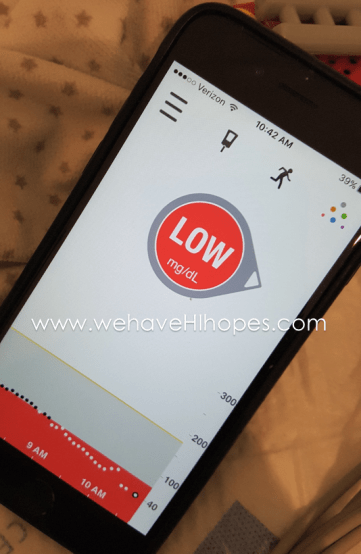
He never showed typical signs of hypoglycemia—no sweating, clamminess, or shaking. Since he can’t communicate, we don’t know what he felt, but he was cranky, asking for milk, and visibly miserable. His CGM alarm kept going off, and we learned that when blood sugar drops below 40, the app stops showing numbers and just reads LOW.
After three hours, his face lost color, and we stopped the fast, took labs, and administered glucagon. Despite everything, he remained alert, playing and even laughing between crying. At that point, he had fasted for 15 hours.
In past glucagon challenges, Jackson’s blood sugar always rose as expected. Not this time.
Instead of rising, his glucose dropped. He was immediately given D10 (dextrose) through his IV and allowed to eat. His sugar quickly spiked to 210, and after stopping the dextrose, he stabilized between 85–120.
Then came the biggest shock—when Dr. Paul reviewed the results, he said something we never expected to hear:
Jackson was making ketones.
For the first time.
HI kids don’t make ketones—that’s part of the disease. But Jackson did.
Even more surprising, the glucagon response showed that his liver was distributing glycogen appropriately—meaning the glucagon “failure” wasn’t due to a liver issue.
These results suggest that Jackson may have Transient Hyperinsulinism—something we never thought possible at this point.
Most cases of transient HI resolve within the first 30 days of life—some within the first year. Jackson was diagnosed at four months old and just celebrated his first birthday, so the odds were not in our favor.
But now?
Dr. Paul believes there’s reason to have HI HOPES.
We’ve chosen to admit him. It’s not that we can’t do this at home, but we want the added security of a team who knows this disease inside and out. If something happens, we want an army behind us.
So in two weeks, we’re going back.
Yesterday, Dr. Paul looked at me and said, “You know, if he outgrows this, you’re going to go through withdrawals.”
He might be right.
Since August, my brain has been running 100 mph—researching, advocating, managing appointments, fighting insurance companies, running a Facebook page, a website, planning a fundraiser, constantly checking my phone for his CGM readings.
If he no longer has HI, we’ll suddenly be thrown into “normal” life—something I’ve never considered a possibility.
But I’d much rather have a calm life with a healthy kid than a hectic one with a sick kid.
None of this is guaranteed. But there’s hope.
This morning, I let Jackson sleep in before daycare. Yesterday was rough on him, and he needed the rest. When I walked into his room, he jumped up to greet me—and I was overcome with emotion.
No matter what the Cure Fast shows next week, I will never stop fighting for him.
This kid is amazing.
He is strong.
He is a fighter.
He is sunshine and rainbows in every storm we go through.
And he deserves a life free of illness.
I want this for him so badly.
#wehaveHIhopes
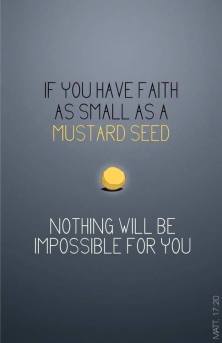
Two years ago, I posted a picture on my Facebook page—an excerpt from Matthew 17:20:
“If you have faith as small as a mustard seed, nothing will be impossible for you.”
I posted it while clinging to hope during an impending miscarriage, believing I could will a miracle. Until the miscarriage was over, I held onto hope.
Now, here I am again—at His mercy—trying to will a cure for Jackson.
A friend introduced me to “Thy Will” by Hillary Scott, a song written after she suffered a pregnancy loss. It resonates deeply.
As a Christian, I wish I had unwavering faith all the time, but I don’t. I’m flawed, human, and I struggle.
I get angry with God. Sometimes I give Him the silent treatment.
I feel resentful, unheard, ignored.
I want to be in control.
And sometimes, I’m just plain mad.
I know, I know—you aren’t supposed to be mad at God, and if you are, you shouldn’t admit it. But He knows me. He hears me. He sees my broken heart.
He knows I’m scared for Jackson.
For the impact on my daughter.
For my marriage.
For losing our home.
He knows how fiercely I love my children.
So why them?
I may never know the answer, but when I start feeling lost, those words replay in my mind:
“Thy will be done.”
And I remind myself—He is God. I am not.
I don’t get to call the shots in my story, in Jackson’s, or in anyone else’s.
I can pout, stomp, and shout.
But in the end, it doesn’t change anything.
And when my tantrum is over, that truth is still there:
Thy will be done.
Some days, I can’t see past the struggles.
I suspect all parents of chronically ill children have those days.
I have my share of moments when I dwell.
When people ask, “How are you?”—I rarely tell the truth.
You put on the brave face, smile, and move forward. Because letting people see how broken you feel is harder than pretending you’re okay.
I think the mustard seed verse speaks to those moments.
Not the moments when life is going perfectly, and faith is as big as a football field.
It’s the low days, when faith feels shaken and small, when self-pity creeps in, when unanswered prayers feel overwhelming.
That’s when I need to remember:
As long as I don’t give up, nothing is impossible.
There are nights when I’m so tired.
The CGM alarm goes off.
I jump out of bed like a machine, navigating to Jackson’s crib by memory.
I try to check his sugar in the dark, half-asleep.
I fumble with the test strip, get an error, start over.
All while trying to be a stealth ninja, not waking him up.
This is my normal.
But in the morning, when I drag my tired feet into his room, God’s grace smacks me across the face.
And I see it.
I see the grace in:
Jackson has taught me so much about life.
His struggles teach lessons to everyone around him.
He may not change the entire world, but he changes the world around him.
I know my disagreements with God aren’t over.
This journey is long.
The only certainty is that God is in control.
And on my worst days, when my faith is so small it can hardly be seen, I will keep believing that all things are possible.
And I will remind myself of the beautiful grace He has given me.
Grace I fall short of deserving—but still receive, every single day.

I have a love/hate relationship with our insurance provider.
We have private insurance through my husband’s employer, and without it, we’d be well over $750K in debt. So in many ways, I am incredibly grateful for it.
But it’s not free.
Between premiums, deductibles, and out-of-pocket maxes, we are drowning.
So when the dreaded package arrives in the mail, informing us:
“This claim is denied. After our review, it has been determined this procedure was not medically necessary.”
It takes the wind out of our sails.
 A Simple Procedure, A Complex Condition
Last month, Jackson needed ear tubes—a routine, 15-minute procedure.
Not a big deal, right?
For most kids, no.
For a child with Congenital Hyperinsulinism, it’s not that simple.
The procedure required general anesthesia, which meant he had to fast from midnight before surgery.
And that’s the problem.
HI kids can’t fast for long periods. Their bodies require constant carbs to prevent dangerous hypoglycemia. Jackson typically needs to eat every 2.5–3 hours—even overnight.
Working with Texas Children’s Hospital ENT and Endocrinology, we made a plan:
His blood sugar remained stable, and surgery went off without a hitch.
We were discharged 45 minutes later.
The stay and surgery? A complete success.
Then, this week—it arrived.
The thick envelope from the insurance company.
By now, we know what it means:
This time? The hospital stay was denied.
“Not Medically Necessary.”
I’ve appealed before. It’s not that I can’t do it.
It’s that I shouldn’t have to.
They have all of his medical records. They know his condition. They know fasting is life-threatening for him.
Yet, every time, I have to send the same information, over and over again.
It’s exhausting.
But I’ll do it.
Because now, a new fight begins—and the fear of assuming $4,000 more in medical debt hangs over our heads.
 In the last several months, I’ve come across an essay titled “Welcome to Holland” over and over again. Some people love it, others don’t, but I think it’s a simple way to put something so complex into an analogy that everyone can understand.
By Emily Perl Kingsley
“I am often asked to describe the experience of raising a child with a disability—to try to help people who have not shared that unique experience understand it. It’s like this:
“When you’re going to have a baby, it’s like planning a fabulous trip to Italy. You buy guidebooks, make plans—The Colosseum, Michelangelo’s David, the gondolas of Venice. It’s all very exciting.
“After months of eager anticipation, the day arrives. You pack your bags and take off. But when the plane lands, the stewardess announces: ‘Welcome to Holland.’
“‘Holland?!’ you say. ‘What do you mean, Holland? I signed up for Italy! I’m supposed to be in Italy. All my life, I’ve dreamed of going to Italy!’
“The stewardess replies, ‘There’s been a change in the flight plan. We’ve landed in Holland, and here you must stay.’
“The important thing is, they haven’t taken you to a horrible, dirty, diseased place. It’s just… different. So, you must buy new guidebooks. Learn a new language. Meet people you never would have met. Holland has windmills. It has tulips. It even has Rembrandts. But everyone you know is coming and going from Italy, and they’re all talking about what a wonderful time they had. And for the rest of your life, you will say, ‘Yes, that’s where I was supposed to go. That’s what I had planned.’
“The pain of that will never fully go away, because losing that dream is a significant loss. But if you spend your life mourning that you didn’t go to Italy, you may never be free to enjoy the very special, the very lovely things about Holland.”
Some days, I feel like I’m in both places at once.
Other times, I feel like I’ve been dropped into Greenland, so far removed from everyone else.
The point of the essay is simple: Life doesn’t always go as planned.
I’ve been a parent for nearly 15 years, and while things haven’t always gone the way I imagined, I never expected this journey.
When you’re pregnant, everyone asks, “What do you want? A boy or a girl?”
The standard answer? “I don’t care, as long as the baby is healthy.”
And I meant it.
With genetic testing before pregnancy, high-risk appointments every two weeks, countless ultrasounds, I really thought we would land in Italy—safe and sound.
I never even considered a detour.
I’ve probably spent too much time mourning the loss of a ‘typical’ childhood for Jackson.
I fear his childhood memories will be filled with:
I hate that for him.
But I can’t change where life has taken us.
What I can do is stop and appreciate the beauty in our Holland.
I have been entrusted with two beautiful children, who love me, who make me a better—albeit exhausted—person.
This journey is hard, but I promise you, it’s worth it.
I just hope we can stay in one place for a while…
I’m not ready to be a world traveler.
 Most days, our lives aren’t easy.
Five hospitalizations in the last few months have left us stressed, scared, and overwhelmed. But despite everything, we are stopping to enjoy the sweetness in our lives—because Jackson is about to turn one!
In the last year, we have:
No, it’s not always easy. But life can sure be sweet.
Lately, Jackson has been mostly stable.
We still have scares—times when his sugar drops without warning, and we fight to bring it back up. But thankfully, that has become the exception rather than the rule.
In the next few weeks, he’ll be readmitted for his first Safety Fast since diagnosis.
The goal? To fast him on Diazoxide alone and see how long he can go without eating.
This isn’t a foolproof method, but it’s one of the only ways to gauge:
So many things affect blood sugar—illness, pain, outside temperature, energy levels—so how he responds in the hospital may not fully reflect real life.
But it will give us a starting point.
And for now, we are holding onto hope and the sweetness of today.
 We have HI hopes